
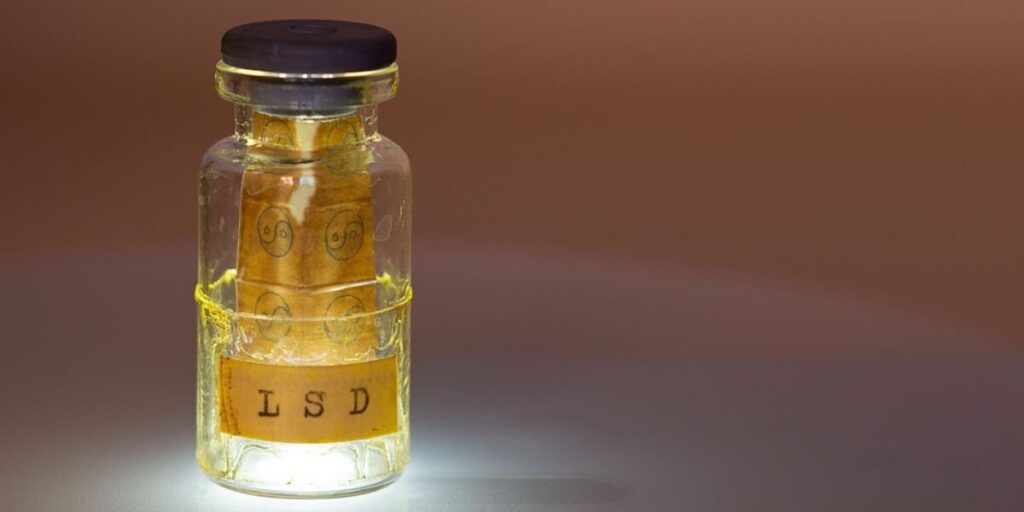
Liquid LSD Explained – refers to lysergic acid diethylamide dissolved in a liquid solvent, most commonly ethanol or distilled alcohol-based solutions. This format is frequently referenced in analytical chemistry, laboratory research, and controlled observational discussions due to its ability to allow precise volumetric measurement.
Unlike blotter-based formats, liquid LSD is valued in research settings for its measurement accuracy, though it also introduces unique challenges related to stability and degradation.
Key Characteristics of Liquid LSD Explained
1. Faster Absorption Profile
Liquid LSD is often discussed as having a quicker onset window compared to blotter-based carriers, largely due to the absence of a solid medium that must dissolve first.
2. Extreme Light and Heat Sensitivity
One of the most critical factors with liquid LSD is its high sensitivity to light, heat, and oxygen. Exposure to UV light or improper storage conditions can accelerate molecular degradation.
PubChem (NIH) – LSD Chemical Stability Overview
https://pubchem.ncbi.nlm.nih.gov
3. Requires Precise Handling
Because LSD is active at microgram levels, liquid formulations demand exceptional precision in handling, measurement, and storage—making laboratory verification especially important.
Why Storage Conditions Matter So Much
Improper storage is one of the most overlooked factors affecting liquid LSD explained integrity. Research literature consistently emphasizes:
- Dark, light-proof containers
- Cool, temperature-stable environments
- Minimal air exposure
- Verified solvent purity
Even small deviations can impact chemical stability, making lab testing and batch verification essential.
Liquid LSD vs Blotters: A Research Perspective
From an analytical standpoint, the difference between liquid LSD and blotter formats lies primarily in delivery medium, not the compound itself.
| Aspect | Liquid LSD | Blotter LSD |
|---|---|---|
| Measurement | Highly precise | Fixed absorption |
| Stability | More sensitive | More stable |
| Storage | Strict conditions | Moderate conditions |
| Research Use | High | High |
This distinction is why liquid LSD is often discussed in laboratory and analytical chemistry contexts rather than casual references.
Why Liquid LSD Appears in Research Discussions
Liquid LSD continues to be referenced in research due to:
- Accurate volumetric dosing potential
- Easier chemical verification
- Direct relevance in analytical studies
- Compatibility with laboratory protocols
These characteristics make it a frequent subject in scientific and educational literature surrounding psychedelic compounds.
Frequently Asked Questions (FAQ)
Is liquid LSD more potent than blotters?
No. Potency is determined by concentration, not format. Differences are often related to measurement precision rather than strength.
Why is liquid LSD harder to store?
It degrades more easily when exposed to light, heat, and oxygen, requiring stricter storage controls.
Why is lab testing especially important for liquid LSD?
Because even minor degradation can alter chemical integrity, third-party lab verification helps confirm identity and stability.
Final Thoughts: Why Liquid LSD Demands Extra Care
Liquid LSD explained highlights the critical importance of proper storage, precise handling, and laboratory verification. While it offers advantages in measurement accuracy, it also presents stability challenges that are frequently underestimated.
Educational transparency and scientific context—values emphasized at CBD Mind Lab—are essential for understanding why format, storage, and testing matter as much as the compound itself.